
Attleboro City Directory Collections
The strongest starting shelf is the Massachusetts State Library directory list. It records a long but uneven Attleboro run rather than one continuous publication. House guides and voting lists add useful address and residence layers. The Attleboro Public Library archive does not replace a printed volume, yet its newspapers and church material can explain a name, a move, or a family relationship found in a volume.
| Collection | Years | Where held | Access |
|---|---|---|---|
| State Library Attleboro directories | 1877–1895; 1897; 1899; 1901; 1903; 1905; 1907; 1909; 1911; 1913; 1915; 1917–1933; 1935–1942; 1942; 1944; 1955; 1956; 1960; 1963; 1965; 1966; 1968; 1978; 1980; 1986; 1990 | Massachusetts State Library | Use the holdings list and confirm the volume |
| State Library house guides | 1925–26; 1927–28; 1929–30; 1931–32; 1933; 1935; 1936–37; 1938; 1941–42 | Massachusetts State Library | Address-focused material; inspect the edition |
| State Library voting lists | 1924; 1939; 1980; 1988 | Massachusetts State Library | Historical residence bridge |
| NARA census-era directory holdings | 1929–1936 | National Archives | Includes Attleboro, North Attleboro, and Plainville |
| Attleboro Chronicle | 1873–1886, 3,298 pages | Attleboro Public Library digital archive | Free online search and browsing |
| Attleboro Sun | 1902–1971, 297,521 pages | Attleboro Public Library digital archive | Free online search and browsing |
| The Sun Chronicle | 1971–1972, 13,927 pages | Attleboro Public Library digital archive | Free online search and browsing |
| Second Congregational Church Records | 1743–1953, 4,350 pages | Attleboro Public Library digital archive | Free online search and browsing |
These collections answer different questions. A directory often ties a person to an address and occupation. A house guide may be the better test for an address. Newspapers and church records can add dates, relatives, notices, and spelling variants, but each needs separate confirmation.
The State Library list also identifies Attleboro and vicinity PSP Blue Book years for 1973, 1975, and 1982. That regional item is not the same as the municipal directory volumes. Genealogy catalogs at the Boston Public Library, FamilySearch, and Allen County Public Library list selected years from 1903 through 1980, including 1903, 1905, 1907, 1909, 1911, 1913, 1915, 1917–1936, 1937–1942, 1944, 1946, 1949, 1951, 1953, 1955–56, 1958, and 1960. Treat those catalog records as finding aids and confirm access with the owning library or database.
Attleboro City Directory Years and Gaps
Read the listed years literally. The State Library holdings show many early volumes, a run from 1917 through 1933, volumes from 1935 through 1942, and selected later years. They do not establish a volume for every calendar year. Missing years are evidence gaps, not proof that a resident left town or that a street did not exist.
- 1877: the earliest documented State Library Attleboro directory year.
- 1925–1942: selected house-guide years add an address-oriented layer.
- 1929–1936: NARA lists an Attleboro directory grouping that also reaches North Attleboro and Plainville.
- 1990: the latest documented State Library directory year in the inspected list.
The title-page publisher and imprint for each Attleboro volume were not verified in the research. Do not assign a publisher name from a general catalog pattern. Inspect the title page or an owning catalog record before citing a publisher, an edition title, or an entry format.
Attleboro changed from a town incorporated in 1694 to a city in 1914, but a printed volume can still use its own title and geographic reach. The documented run begins after the Attleboro Chronicle began in 1873 and before the Attleboro Sun began in 1902. That sequence gives useful context for a missing directory year: a newspaper notice or an older town, church, or clerk record may provide the bridge, while the gap itself should remain visible in the research notes.
Note: Report a missing year as a gap in the documented shelf, then seek a nearby directory, census, newspaper, or deed record.
Attleboro Directory Volumes in Print
The historical shelf works best beside the Attleboro Public Library digital archive. Its advanced form supports multiple free-text inputs, a people-and-places-and-events mode, title and location selectors, date limits, and browse-by-title or decade. Search the exact surname and street first. Then try initials, a surname fragment, the older Attleborough spelling, and nearby North Attleboro or Plainville when the directory itself has a wider geography.
The National Archives city-directory holdings document the 1929–1936 group used with the 1930 census. The source image below identifies that federal finding route.
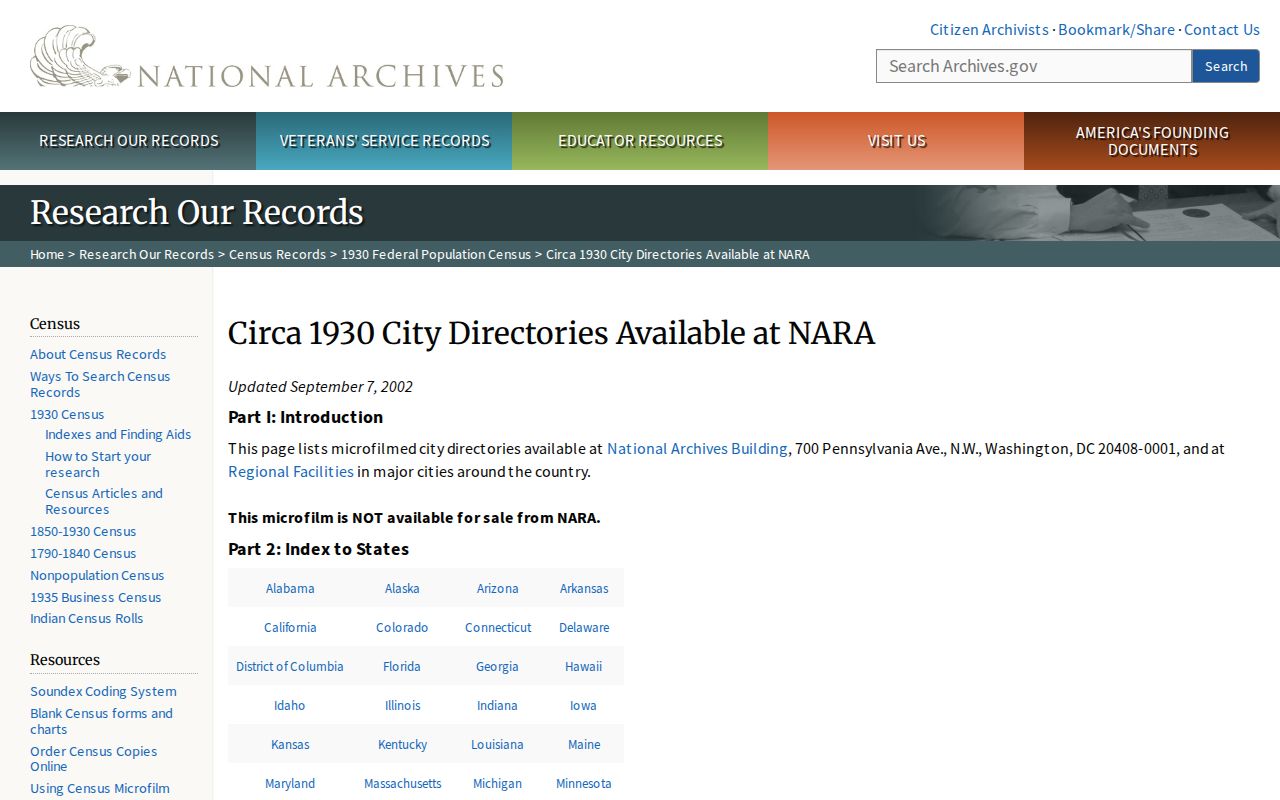
Because the NARA group includes neighboring communities, copy the place name exactly before treating an entry as an Attleboro address. Census geography and directory coverage are related, but they are not identical.
For a newspaper match, the archive advanced search accepts several free-text fields and can combine people, places, and events with title, location, and date filters. Search a surname with a street name, then run a second search for the address alone. Obituaries, marriage announcements, civic meeting reports, property notices, probate notices, and business advertisements can establish dates around a directory listing. They are supporting evidence, not a reason to interpolate an unprinted directory year.
Reading an Attleboro City Directory Entry
No Attleboro directory page image was inspected for this research, so an entry should be handled as an inspection checklist rather than a made-up transcription. Start with the volume title page and abbreviation key. Then check the alphabetical section, business listings, and any street or house-guide material. A printed mark can mean something different from one edition to another.
| Entry feature | What to inspect before relying on it |
|---|---|
| Name | Surname, initials, spelling, and any separate family member listing. |
| Family notation | Spouse in parentheses or a widow notation, if the volume actually uses one. |
| Occupation | Occupation and employer or business affiliation, when printed. |
| Address | House number, street, apartment, boarding indication, and nearby-town scope. |
| Residence mark | Any “h,” “r,” or similar mark only after reading that edition’s key. |
| Volume evidence | Page number, year, title, introductory explanation, and separate business or street sections. |
- Criss-cross directory
- An address or street-order section that can point from a location to a listed occupant. Confirm that the edition has one before expecting it.
- Householder index
- A listing organized around the person responsible for a household or address. It is not automatically a property-ownership record.
- Abbreviation key
- The publisher’s explanation of shortened words and marks. Photograph or note it before interpreting “h,” “r,” or a widow notation.
Use the entry inventory as a capture checklist, not as a statement that every Attleboro edition prints every field. Later volumes may add a telephone number. Some editions may separate institutions, churches, factories, public offices, absent owners, business entries, or a street guide. The page and volume metadata matter because a reader should be able to find the same line again. If a mark looks like a residence or ownership notation, read the printed explanation before translating it into a modern claim.
Attleboro House Guides by Address
The State Library house guides from 1925–26 through 1941–42 are a rare address-focused layer. They may turn an address into an occupant where an alphabetical search does not, but the edition must be checked to learn how its street organization and marks work. Read in both directions: name to address in the resident list, then address or street to occupant in the guide. The modern property trail belongs on the Attleboro Street Directory; these historical guides are a companion, not a substitute.
The Attleboro Historic Preservation Society was organized in 1999 to preserve the East Attleborough Academy at 28 Sanford Street and collects local historical material, buildings, postcards, fires, and train-wreck history.
Its collection can provide address context, but it does not certify a directory entry. Keep the volume year, page, and exact address with any historical image or story used to support a household trail.
Use a guide to locate a likely occupant, then test that result against the alphabetical entry, a deed party, a census, or a dated notice. Street numbers and place labels can change in the records, and the research did not verify a historical street-renumbering history. A mismatch therefore calls for an inspection of the original source rather than a forced match.
Note: A householder, resident, business occupant, and owner can be different people, so treat the edition key as part of the evidence.
Trace an Attleboro Directory Household
A household trail is stronger when each step answers a narrow question. Keep original spellings and record the source date. A name disappearing from a directory volume can reflect a move, death, unlisted status, a changed spelling, or an ordinary coverage gap. It cannot answer which without another record.
- Begin with the earliest confirmed name and address from a deed, obituary, census, or parcel record.
- Open the closest documented Attleboro directory year and, when available, the related house guide. Preserve the spelling and street number exactly.
- Read backward and forward through the actual holdings. Flag gaps such as 1934, 1943, 1945, and most of 1969–1977 instead of filling them by assumption.
- Pair the household with the nearest public federal census year: 1910, 1920, 1930, 1940, or 1950. Compare spouse, children, occupation, and address carefully.
- Search the library newspapers for the surname plus the address, then use an obituary, church record, probate matter, or deed to test what changed.
- Use the Registry legal description to distinguish an owner, seller, trustee, business occupant, or nearby person from a resident.
A deed, obituary, and probate record may help document an heir or close a former resident’s trail. Each is a different record type with its own custodian and limits.
The public federal census is another time marker. The 1950 census is public under the 72-year rule, while 1960 and later returns are not generally public at the current date. A census household and a directory entry can disagree because they were created at different times, cover different geography, or list a different person at the same address. Preserve both dates and explain the difference rather than choosing the more convenient result.
Attleboro Directory Stories
Historical volumes make more sense beside Attleboro’s industrial history. The Attleboro Area Industrial Museum at 42 Union Street preserves company and industrial-history material. Its posted hours are Thursday and Friday, 10 a.m. to 4 p.m., and Saturday, 10 a.m. to 2 p.m. Exhibits cover jewelry manufacturing, Balfour, the Great Fire of 1898, the Fire Queen, and a local 1914 cash register.
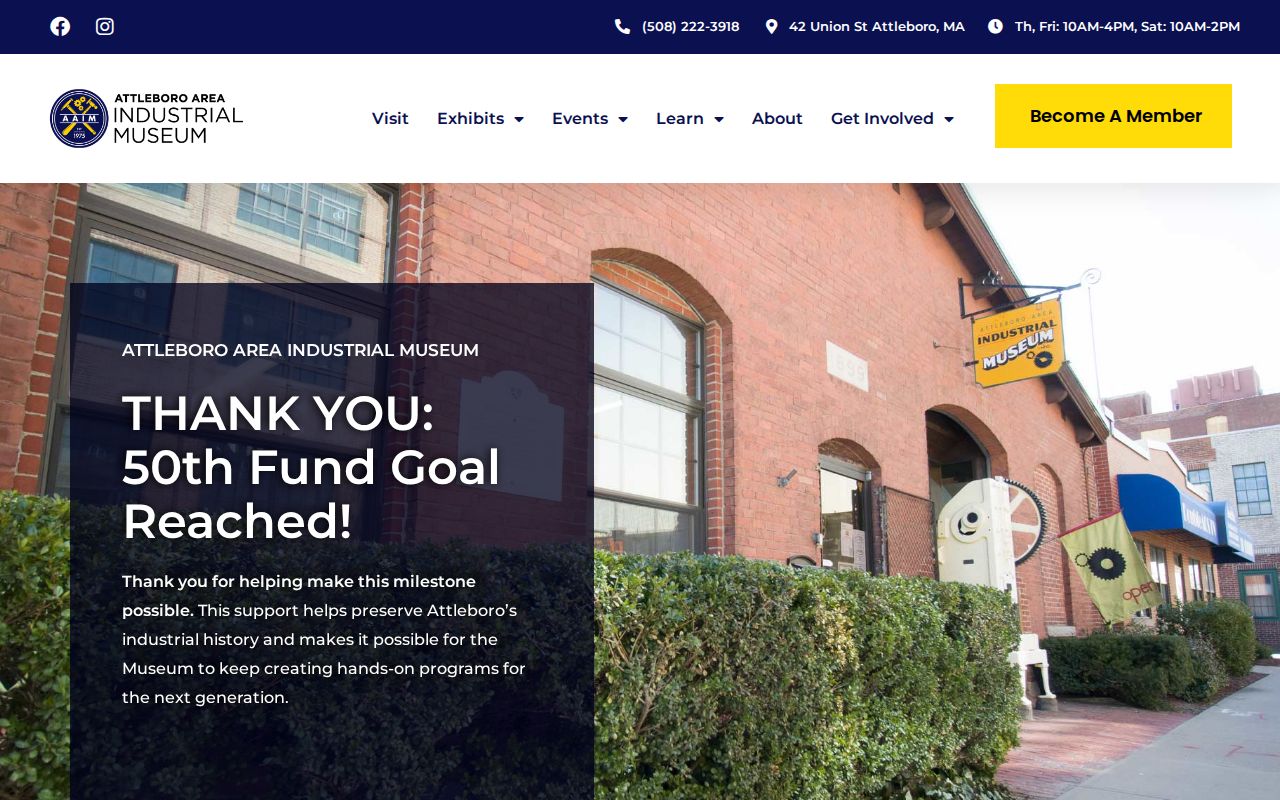
The museum and Historical Preservation Society also preserve local stories about the 1898 Great Fire and the 1912 train wreck. Those stories may explain why a newspaper, map, or reconstructed history is helpful when an expected local record is absent, but no courthouse or Registry record loss was confirmed.
Factory and company names can be useful historical search terms when they appear beside a person in an entry. D.E. Makepeace Company, Dodgeville Mill, Hebronville Mill Historic District, Watson Newell Factory, Balfour, Attleboro Refining, jewelry, silversmith, jeweler, refining, mill, Fire Queen, and Watson Block are documented local-context terms. They help locate a contemporaneous notice or business context, not identify an unlisted person by guesswork.
Attleboro Archive Routes Beyond Directories
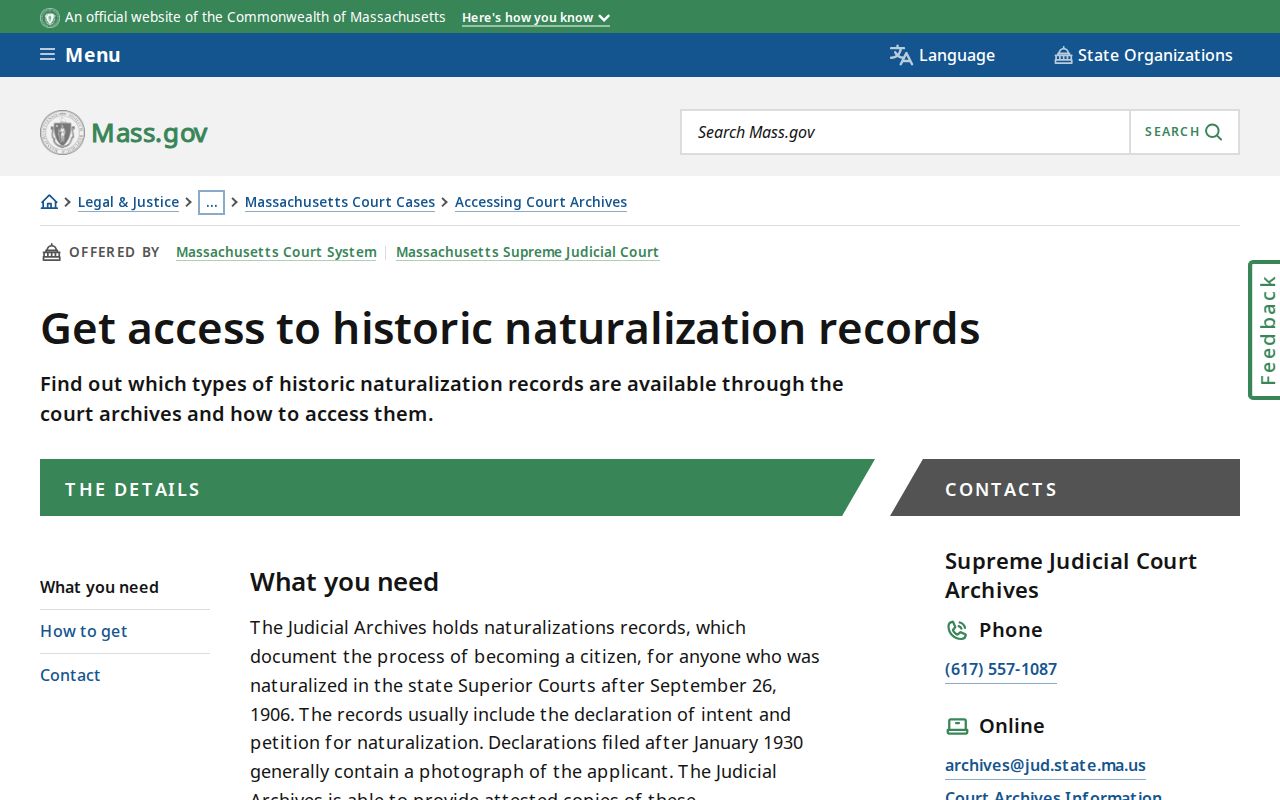
Directory research often reaches a person who needs a different kind of record. The Massachusetts Archives and Judicial Archives naturalization route identifies a Bristol County index for 1907–1992. The documented collections include declarations from 1906–1930 and 1931–1945, petitions from 1907–1933, and abstracts that may give a name, age, occupation, residence, court, and date. Post-1906 federal naturalizations are a NARA Northeast route.
For place context, the Library of Congress May 1911 Attleboro Sanborn gallery has 23 sheets. Related editions listed in the research include 1885, 1889, 1894, 1899, and 1905. Maps can date a building or identify a business setting; they are not resident rolls.
Map labels, building footprints, use, materials, lot context, and occasional business or owner labels give a useful address bridge. They are especially helpful when a directory reports an old street form or a business location. A map does not prove that every person associated with a building lived there, so pair it with a dated directory, census, newspaper, deed, or court record.
Note: Naturalization abstracts and maps can corroborate a time and place, but they should not replace the directory page or an official certified record.
Attleboro Archive Page Numbers
The Attleboro Public Library archive offers a large companion record set: 297,521 pages of the Attleboro Sun from 1902–1971. The smaller documented runs matter too, with 3,298 Chronicle pages from 1873–1886, 13,927 Sun Chronicle pages from 1971–1972, and 4,350 Second Congregational Church Record pages from 1743–1953. Those figures describe digitized pages, not a count of people or an uninterrupted directory series.
Use the numbers to choose a search method. A rare early surname may be best found by browsing the Chronicle around a known year. A twentieth-century address or company can be searched in the Sun, then inspected in context because OCR can misread initials and place names. Church records may reveal baptism, marriage, death, membership, or community-network information, depending on the scanned page. Do not turn a hit in one collection into a claim that the person appears in every local record.
Location context can also resolve an ambiguous directory address. The city Historical Commission’s guide covers 47 historic properties in six clusters, while the Library of Congress map collection includes the 23-sheet May 1911 Sanborn set. Compare a printed street and year with the correct map edition, historic-site record, or contemporaneous newspaper. That preserves the difference between a directory listing, a building history, and an address shown on a later map.
Attleboro Directory Census Pairing
Pair an address or household from an Attleboro directory volume with the nearest public federal census instead of trying to make one source answer every question. The useful public census years for this trail are 1910, 1920, 1930, 1940, and 1950. The federal 72-year rule makes 1950 available, while 1960 and later federal census returns are not generally public at the current date. A census can identify a household at one enumeration date; a directory can show a different address, occupation, or spelling at another point in the same decade.
Start by recording the directory year, page, printed place name, street number, and all initials. Then compare the nearest census household for age, relationship, birthplace, occupation, and address detail without assuming that a same-name match is correct. The 1929–1936 NARA directory group includes Attleboro, North Attleboro, and Plainville, so location must be carried forward into the census search. A household that appears in a neighboring town’s directory coverage may not belong in an Attleboro city record.
When census and directory facts conflict, preserve both citations and seek a dated bridge. The newspaper archive can provide a move notice, obituary, business advertisement, property notice, or civic report. A deed can establish a party’s recorded transaction, while a probate file may identify a fiduciary or heir. That sequence helps explain a difference without treating an address, a family role, or an occupational reference as a permanent identity.
Attleboro Directory Research Limits
Older Attleboro material may use Attleborough, while a directory may include North Attleboro or Plainville. Record the printed place name before merging results. Directory coverage, municipal boundaries, postal labels, census districts, and Registry jurisdictions are separate systems. The searchable library archive is valuable, but OCR can confuse initials, names, and place spelling.
When a needed volume, physical shelf location, microfilm run, local-history room hours, yearbook set, or staff service is not published, ask the Attleboro Public Library reference department rather than assuming it is online. For city certificates, business records, or older municipal registers, the Attleboro City Clerk is the appropriate first contact. Ask for a defined record, date range, name or address, and whether an inspection, ordinary copy, or certified copy is needed.
No official city-run interment database, municipal cemetery register search, animal-license search, alarm-permit search, or municipal-court index was located in the inspected sources. That is a finding, not a reason to say that the records do not exist. Ask the City Clerk, Department of Public Works, cemetery custodian, or another named office whether an in-person register or request form is available. The same rule applies to a missing historical directory volume: a library, archive, or clerk may hold paper or microfilm even when no public search box is visible.
Attleboro’s record keeping is distributed across clerk, church, industrial, directory, municipal GIS, state database, Registry, court, and library systems. The city’s 2025–2026 cybersecurity incidents also show why online availability is not the same as permanent custody. If a portal is unavailable, use the documented counter, written-request, archive, or library route and note the date of the attempt. This keeps a directory trail honest when a scan, index, or municipal system is temporarily unavailable.