
Attleboro Previous Residents by Era
Different sources hold different slices of an address history. A parcel and current deed are the practical starting points. Earlier deeds establish a title trail, while directories, house guides, census returns, maps, newspapers, and church records can supply an occupant or family lead. Match every result to a date. The table does not imply continuous coverage where Attleboro has documented gaps or a portal has an unpublished start date.
| History source | Documented years or span | Keeper or route | Address-history value |
|---|---|---|---|
| Northern Bristol recorded-land portal | Current recorded documents; earliest online year not published | Registry portal and Registry counter | Recorded parties, legal description, plan, book, page, and document trail |
| State Library Attleboro directories | 1877–1990, selected years | Massachusetts State Library | Historical name, address, and printed household leads |
| State Library house guides | 1925–26, 1927–28, 1929–30, 1931–32, 1933, 1935, 1936–37, 1938, 1941–42 | Massachusetts State Library | Address-oriented occupant or householder leads |
| NARA city-directory collection | 1929–1936 | National Archives | Attleboro material that also includes North Attleboro and Plainville |
| Attleboro Public Library archive | Chronicle 1873–1886; Sun 1902–1971; Sun Chronicle 1971–1972; church records 1743–1953 | Digital archive | Newspaper, obituary, church, and address context |
| Attleboro Sanborn editions | 1885, 1889, 1894, 1899, 1905, and May 1911 | Library of Congress | Building footprint, use, lot, and map-era street evidence |
For a recent ownership question, begin with the current parcel and Registry record. For a person who lived there decades ago, begin near the date with a house guide or directory, then pair the result with the closest public federal census and a deed or map. The complete historical shelf is treated in the Attleboro city directory collection page; the focus here remains one address moving backward.
Start an Attleboro Previous Residents File
Make one file for the address before searching names. Put the current street number, parcel ID, situs address, legal description, plan reference, and date of each search in it. The Attleboro assessor maintains ownership information from recorded Registry transactions, and AxisGIS accepts an owner, address, or parcel ID. A property mailing address may be different from the parcel’s situs address, so treat it as correspondence information rather than proof of residence.
The basic trail is: current parcel and legal description → current deed → seller as earlier grantee → historical directory or house guide → nearest census → newspaper, church, obituary, or probate record. A later step may correct an earlier one. Preserve the exact spelling used by each source, including Attleboro or Attleborough where that is how a historical record appears.
- Grantor and grantee
- The grantor transfers an interest in land. The grantee receives it. In a purchase deed, the later seller is often the next name to search as an earlier grantee.
- Chain of title
- The sequence of recorded transfers for the same land. It identifies recorded ownership, not necessarily every person who lived there.
- Legal description
- The lot, plan, bearings, distances, or other land description in a deed. It often survives a changed street name or number better than an address.
- Enumeration district
- The geographic area used by a federal census. It helps locate the right census pages after a directory gives an address.
Trace Attleboro Previous Residents by Deed
The deed chain is the backbone for former owners, not a shortcut to former occupants. Attleboro is in the Northern Bristol Registry district. The Northern Bristol Registry portal offers recorded-land, street, plan, Land Court, advanced, and image searches. Registration is free and the portal states that printing a document costs $1 per page. Its online documents are informational; the Registry supplies official copies.
- Open the current AxisGIS parcel and copy the owner, parcel ID, situs address, legal description, and linked deed or plan clues.
- Find the current owner’s acquisition deed in a Recorded Land Inquiry or street search. Capture the recording date, book and page or document number, seller, legal description, and plan reference.
- Search the seller as a grantee before the later recording date. That earlier acquisition is the next link in the chain.
- Repeat the seller-to-grantee step, checking alternate spellings, trustees, estates, and corporate names when a deed requires it.
- When a current street address disappears, follow the legal description, plan, former street name, and neighboring owner rather than assuming a direct number conversion.
- Recorded-land inquiry
- A Registry search route for recorded land documents. Use it with a party name, book and page, or other document clues.
- Plan reference
- A cited plan book and page or related drawing that can bridge lots and street addresses.
- Document image
- The viewable recorded document in the portal. It remains informational unless the Registry supplies the official copy.
A Registry search may also point to mortgages, discharges, plans, or Land Court material. Use those as land-record evidence. A party address in a recorded document can be mailing or transaction information and should not automatically be called a residence.
Keep the Attleboro Registry Gap Visible
The earliest online year for Northern Bristol was not published on the official pages inspected. The portal displays a current last-recorded notice, but that does not verify the first online book, image, or index year. Do not turn an unverified gap into a date. Contact the Registry about older Attleboro books or microfilm and use the counter, phone, or email route when an online search stops.
Separate records history from consumer protection. The Commonwealth’s Registry property-fraud alert information describes free alerts and indicates that address or book-page options may be available where offered.
An alert can help a current owner notice a new recorded filing. It does not replace reviewing the actual Registry document or researching an older address chain.
Attleboro House Guides for Past Residents
The State Library house-guide runs are a rare address-oriented source for previous residents of an Attleboro address. The documented editions are 1925–26, 1927–28, 1929–30, 1931–32, 1933, 1935, 1936–37, 1938, and 1941–42. Search the street and number in the relevant guide, then test a person found there in the nearby alphabetical directory, census, newspaper, or deed record. The edition’s key matters because it may distinguish a householder, a business occupant, or another listed role.
The longer State Library directory run is 1877–1895; 1897; 1899; 1901; 1903; 1905; 1907; 1909; 1911; 1913; 1915; 1917–1933; 1935–1942; 1944; 1955; 1956; 1960; 1963; 1965; 1966; 1968; 1978; 1980; 1986; and 1990. The State Library holdings list is the authoritative starting list for those gaps. Do not silently supply a missing year from a later or earlier book.
The Attleboro Historic Preservation Society gathers local images, buildings, fires, train wrecks, postcards, and historical material, which can add context to a dated address lead.
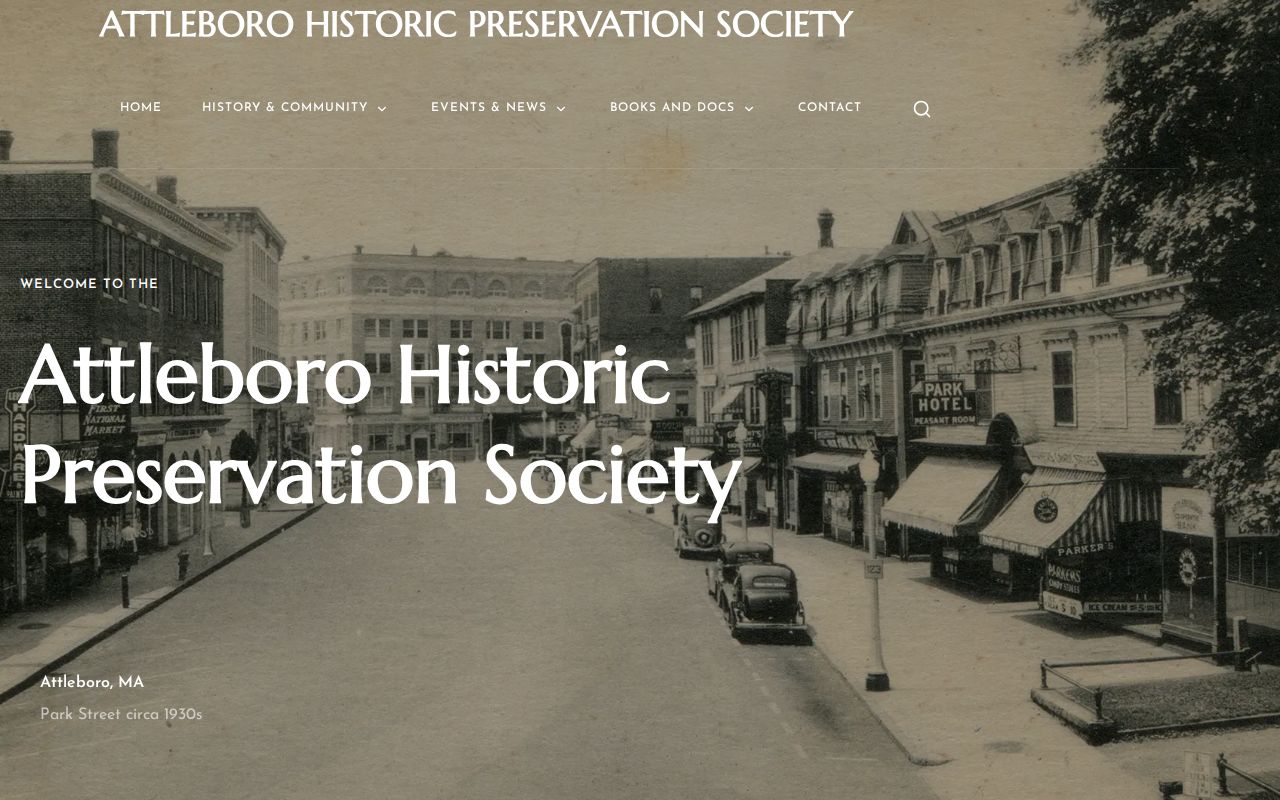
Preservation material can identify a building or neighborhood story, but the directory, deed, and map records should still carry the factual address trail.
Pair Attleboro Directories With Census
Use a directory or house guide to place a name at an address, then compare it with the closest public census. Federal census returns are public through 1950 under the 72-year rule; 1960 and later are not generally public at the current date. Pairing the sources can clarify a household at a point in time, but city-directory geography and census geography can each include nearby communities differently.
The NARA city-directory holdings list Attleboro material for 1929–1936 that includes North Attleboro and Plainville. Treat that broader coverage as a catalog fact, not proof that every result belongs within the Attleboro city boundary.
For a household-level trail, record the directory year and address, identify the nearest census year, inspect the right enumeration district, then verify names and relationships with contemporaneous newspapers, church records, vital records where eligible, or probate documents.
Map Attleboro Past Residents Carefully
Sanborn maps date the built setting, not the residents. The Library of Congress holds a May 1911 Attleboro collection with 23 sheets, plus related official editions from November 1885 with four sheets, May 1889 with five, June 1894 with six, April 1899 with eight, and January 1905 with twelve. Maps can show footprints, use, construction materials, lots, and occasional owner or business labels. They are valuable when a deed description and a street address need a physical bridge.
The Attleboro historic-site guide identifies 47 properties in six clusters. Its location information can help compare a known historic building with a deed, house guide, map sheet, or directory date.
No official source inspected documented an Attleboro-wide historical renumbering date or a complete list of renamed streets. Use the map-era name, legal description, plans, and neighboring parcels to bridge a discrepancy rather than inventing a conversion.
Attleboro Address Stories and Records
Local history can explain why a newspaper or preservation source belongs beside the formal record trail. The Attleboro Area Industrial Museum preserves company and industrial history and highlights the Great Fire of 1898, jewelry manufacturing, Balfour, the Fire Queen, and other local material. The Historical Preservation Society also includes local fire and train-wreck material. These sources can supply dates, building context, or useful newspaper search terms, but they do not replace title records or a dated directory entry.
The Attleboro Area Industrial Museum describes itself as a repository for local company historical data and maintains industrial-history collections.
For an old industrial or commercial address, compare museum or preservation context with Sanborn sheets, Registry plans, city directories, and the library newspaper archive. The combination may explain a building’s use without claiming that an institution’s record is a resident list.
Note: A local-history story is supporting context; the date, address, and named party still need confirmation in a record for that period.
Close an Attleboro Previous Residents Trail
When a former resident disappears from an address source, look for a transition rather than a conclusion. The Attleboro Public Library digital archive includes the Attleboro Chronicle for 1873–1886, the Attleboro Sun for 1902–1971, the Sun Chronicle for 1971–1972, and Second Congregational Church Records for 1743–1953. Search surname fragments, initials, street fragments, alternate Attleborough spelling, and a date range because newspaper OCR can misread names and abbreviations.
An obituary, funeral notice, probate notice, or church record can identify relatives, a later address, a death, or an estate lead. For an estate, MassCourts can help locate a public case reference, while the Bristol Probate and Family Court division is the route for the actual docket or file. Some probate material may be impounded. Treat a newspaper statement as a lead to verify, especially where property ownership or family relationships matter.
Lawful use. Previous-resident research is appropriate for family history, heirs, property history, and personal curiosity. Do not use address, obituary, voter, court, or deed details to pursue, threaten, monitor, or harass any living person.
Attleboro Previous Residents Record Gaps
Several gaps should remain visible in any address history. No online Attleboro permit database was found in the inspected official sources. Request a permit, inspection card, zoning or conservation filing, board packet, or code record by address and date range from the actual city custodian. The city’s Planning and Development route is useful for map materials, while the City Clerk is a practical point of contact for municipal records access and existing local files.
Under Massachusetts public-records guidance, a written request should identify the existing record and date range with reasonable specificity and request electronic delivery where possible. A records access officer generally responds within ten business days under M.G.L. c. 66, § 10. The law does not require a custodian to create a new history or answer an open-ended research question.
Use the counter, library, Registry, court clerk, and written-request channels when a portal does not contain a record. That preserves the difference between a missing online result and a record that was never created or is unavailable.